Vilcek Foundation
  • About
    • About

      The Vilcek Foundation raises awareness of immigrant contributions in the United States and fosters appreciation of the arts and sciences.

    • Our Mission
    • Our Founders
    • Our Team
    • Our History
    • Archive
    • Press Center
    • Contact
  • Prizes
    • Prizes

      The Vilcek Foundation Prizes celebrate extraordinary achievements in the arts and sciences.

    • About the Prizes
    • Prize Recipients
    • Vilcek Prize

      Awards immigrants with a legacy of major accomplishments.

    • Vilcek Prize for Creative Promise

      Recognizes young immigrant professionals for outstanding achievements.

    • Vilcek Prize for Excellence

      Celebrating intellectual and cultural leaders in the United States.

    • Marica Vilcek Prize in Art History

      Honors art historians, curators, and fine arts professionals.

  • Art
  • Grants
    • Grants

      Grants awarded to 501(c)(3) cultural, educational, and philanthropic organizations in the United States.

    • Grants

      Learn more and apply for a grant.

    • Grants History

      Explore a list of past Vilcek Foundation grantees.

    • Open Grant Applications

      Apply now for Vilcek Foundation grants. Nonprofit organizations meeting eligibility requirements are invited to submit applications by April 30, 2026.

      APPLY FOR A GRANT
  • Events
  • News
Sign Up Search
Home > News > Matthew Bogdanos: A Relentless Defender of Cultural Heritage

Matthew Bogdanos: A Relentless Defender of Cultural Heritage

News | February 2, 2026
Tags
antiquities art history arts repatriation Bucknell University classical studies Columbia University district attorney marine United States Army War College
Download audio
Audio: Listen to this post
Share this page
Share this page on X Share this page on Facebook Share this page on LinkedIn
Portrait of Matthew Bogdanos wearing a suit in an office at the Greek Consulate

For Colonel Matthew Bogdanos, the work is never finished. Reflecting on his career repatriating invaluable stolen cultural artifacts through the New York District Attorney’s Office and during his military service overseas, Bogdanos admits that “just as one case closes, another opens.” 

At the intersection of passion and justice, Bogdanos upholds a tireless commitment to his decades-long crusade against the illegal antiquities trade. This fight has taken Bogdanos from the rubble of Baghdad to the auction houses of Manhattan, and from the halls of the United Nations to underground terrorist bunkers in the Iraqi desert.

“History warns us worse is coming,” Bogdanos says. “Once you erase a people’s historical identity, the next step is to erase the people themselves.”

Actionable Intelligence

Greek Antiquities on a table during a repatriation ceremony

This reality drives his work, pushing him forward with an urgency that rises above any single investigation or recovered artifact. For Bogdanos, protecting cultural heritage equates to saving human life. After leading the 2003 investigation into the looting of the Iraq Museum, where he and his team recovered thousands of stolen antiquities, Bogdanos was not satisfied with simply writing a report. He took his findings from the museum and turned them into actionable intelligence, testifying before the United Nations, Interpol, and the British Parliament. 

Bogdanos then went a step further, teaming up with William Patrick to author Thieves of Baghdad, a work not done for personal gain (all royalties go to the Iraq Museum) but to sound an alarm that the art world was reluctant to hear: the genteel world of antiquities collecting had become a laundering scheme financing global terrorism.

“Smugglers care only about making money, whether the cargo is drugs, weapons, human beings, or antiquities,” Bogdanos wrote in a 2005 New York Times op-ed. 

Funding Terrorism

By 2015, the UN Security Council acknowledged what Bogdanos had been warning of for nearly a decade: Terrorism was being funded across the region through the use of “the looting and smuggling of cultural heritage.”

But Bogdanos refused to wait for international bureaucracy to catch up. Upon returning to the Manhattan District Attorney’s Office, he established New York City’s first task force dedicated to investigating and prosecuting antiquities theft and trafficking. His approach was characteristically direct: “Don’t call them collectors. Call them what they are: criminals.”

Bogdanos’s uncompromising stance stems from his classical education and upbringing, where he grew to love ancient history and even embraced the Greek concepts of themis (what’s right) and aretē (excellence for its own sake). 

“If you decide in advance to act honorably, then when the moment arises, you know exactly what to do,” says Bogdanos. For the district attorney, honor isn’t an ideal or abstraction. It’s a decision made well before a crisis arrives; a form of mental conditioning that points you toward the right action.

Blood “Antiquities”

Bogdanos’s commitment now extends to the next generation of cultural guardians. At the 2015 Cairo Summit, Bogdanos joined ministers and advocates from 10 Middle Eastern and North African countries to forge the Cairo Declaration—a regional task force tasked with halting the trade in what he calls “blood antiquities.” 

The summit was a moment where years of advocacy finally bore fruit, yet Bogdanos knows this victory is merely one battle in a war that will be “measured in decades, not years.”
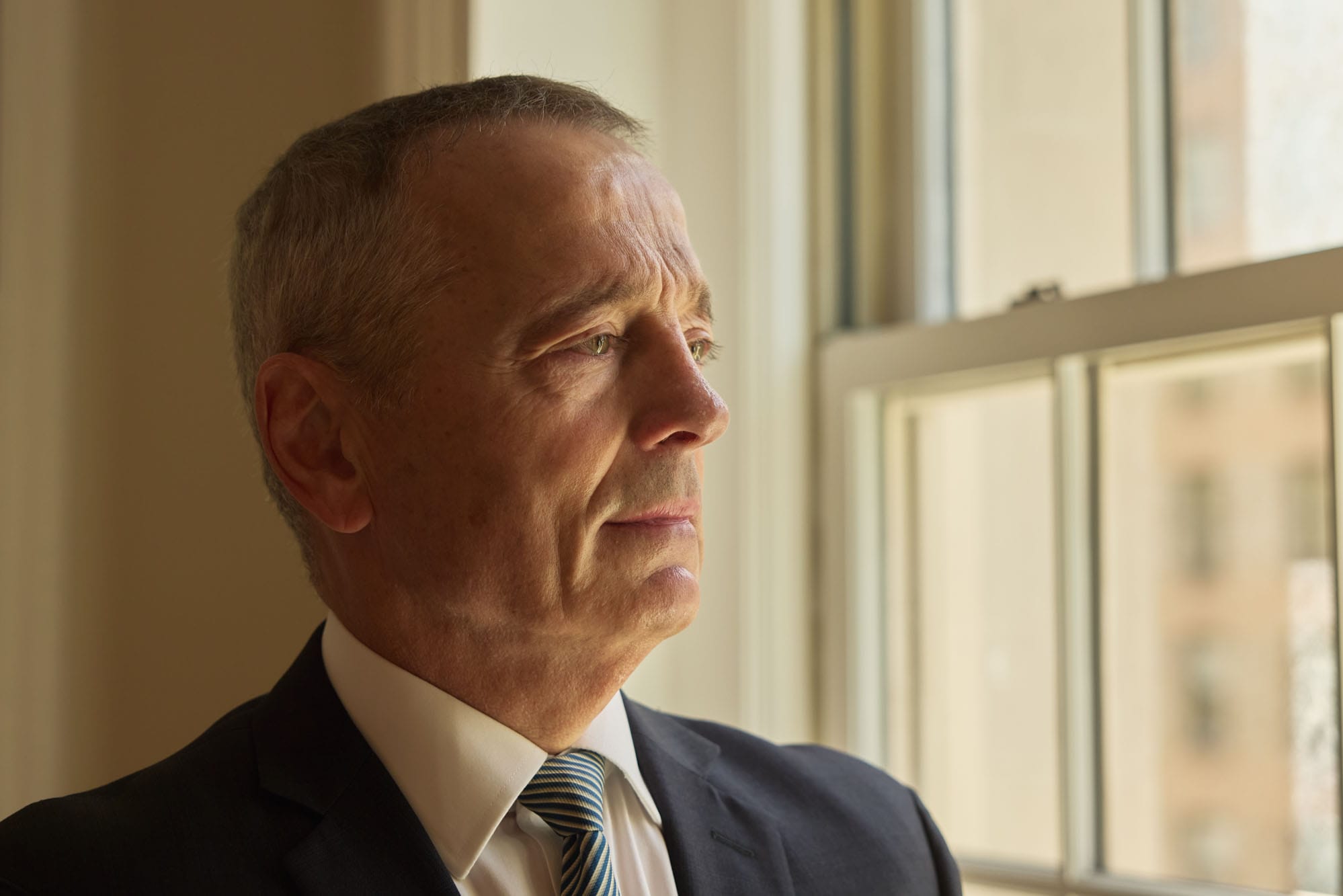
Portait of Matthew Bogdanos looking off to the side towards a window in his office

What makes Bogdanos’s work remarkable is not just his success in any single endeavor, but his refusal to rest on those successes. Each criminal conviction is not an endpoint but a launching pad for the next mission. As Bogdanos notes about illicit art from World War II still being recovered today, “The battle must be joined today to stop the destruction before it is too late.”

Tags
antiquities art history arts repatriation Bucknell University classical studies Columbia University district attorney marine United States Army War College
Share this page
Share this page on X Share this page on Facebook Share this page on LinkedIn

Related News

February 2, 2026

Tanya Meléndez-Escalante: Uplifting Latinx Culture Through Fashion Education

The fashion educator develops multicultural programs through her curations at the Museum at FIT.
Tanya Meléndez-Escalante standing inside a museum gallery with fashion displays in the background during an exhibition at The Museum at FIT in New York City.
February 3, 2025

Vilcek Foundation Awards $250,000 in Prizes to Immigrant Curators

The Vilcek Foundation awards $250,000 in prizes to immigrant curators Oluremi C. Onabanjo, Donna Honarpisheh, Aimé Iglesias Lukin, and Bernardo Mosqueira with the 2025 Vilcek Foundation Prizes in Curatorial Work.
Four diagonal splices featuring portraits of Oluremi C. Onabanjo, Donna Honarpisheh, Aime Iglesias Lukin, and Bernardo Mosqueira, against a red background.
February 3, 2025

Vilcek Foundation Awards $100,000 Art History Prize to Francesca Du Brock

The Vilcek Foundation awards $100,000 to Francesca Du Brock, chief curator of the Anchorage Museum, with the 2025 Marica Vilcek Prize in Art History.
Francesca standing outside of the entrance to the Anchorage Museum in front of the signage.

You may also be interested in

Matthew Bogdanos

Matthew Bogdanos receives the Marica Vilcek Prize in Art History for his work recovering looted antiquities and his advocacy to preserve cultural artifacts.
A portrait of Matthew Bogdanos

Tanya Meléndez-Escalante

Tanya Meléndez-Escalante receives the 2026 Vilcek Prize for Fashion & Culture for her design of meaningful exhibitions and programs that reveal the hidden diversity of fashion styles and talent from across Latin America.
A portrait of Tanya Meléndez-Escalante.

Oluremi C. Onabanjo

Oluremi C. Onabanjo receives the Vilcek Prize in Curatorial Work for her work to examine the power, position, and production of Blackness in relation to the unfinished global history of the photographic medium.
A portrait of Oluremi Onabanjo.

Join our mailing list

Sign Up
Vilcek Foundation
21 East 70th Street
New York, New York 10021

Phone: 212.472.2500

Email: info@vilcek.org

  • About
    • Our Mission
    • Our Founders
    • Our Team
    • Our History
    • Archive
    • Press Center
    • Contact
  • Prizes
    • Prize Recipients
    • Vilcek Prize
    • Vilcek Prize for Creative Promise
    • Vilcek Prize for Excellence
    • Marica Vilcek Prize in Art History
  • Art
  • Grants
    • Grants History
  • Events
  • News
  • Careers
Connect with us
  • Connect with the Vilcek Foundation on Facebook
  • Connect with the Vilcek Foundation on Instagram
  • Connect with the Vilcek Foundation on Bluesky
  • Connect with the Vilcek Foundation on X
  • Connect with the Vilcek Foundation on LinkedIn
  • Connect with the Vilcek Foundation on Youtube
  • Privacy Policy
  • Terms and Conditions
  • Accessibility Statement
© 2026   Vilcek Foundation
We use cookies to ensure that we give you the best experience on our website. If you continue to use this site we will assume that you are happy with it.