
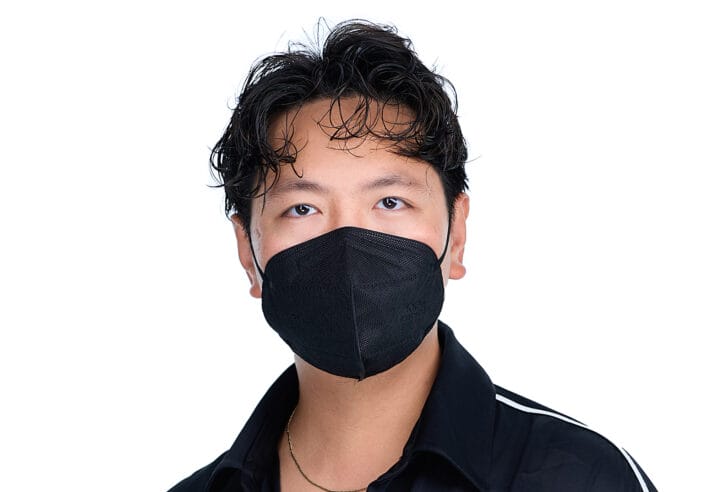
Uyen Tran is using science to make clothing that is better for the planet. An immigrant from Vietnam, her practice has been shaped by the negative impacts of the fashion industry she witnessed in her hometown.
“My focus is on creating sustainable and practical alternatives to the plastics and leathers we use every day: materials that are accessible, beautiful, and part of a bigger shift toward caring for our health and our planet,” Tran says.”
‘We must tackle the overconsumption crisis’

Tran first became aware of the importance of recycling textiles from her mother, who preferred to thrift, mend, or reinvent clothing the family already owned.
“Watching my mother’s hands stitch life back into old garments made me realize fashion wasn’t just about appearance; it was about care, creativity, and survival,” Tran says. “Later, when I studied design, I understood that what I really wanted was to reimagine the materials themselves.”

This reduce-reuse-recycle mentality is not an uncommon practice in Tran’s hometown of Da Nang, Vietnam. Conversely, people in many Western countries wear individual garments an average of five times before disposing of them. Fast fashion is the second-biggest consumer of water globally and is responsible for 10% of CO2 emissions worldwide. Da Nang and other coastal Vietnamese towns are bearing the brunt of resulting climate change.
Today, rising sea levels in Vietnam have forced thousands of farmers to abandon traditional crops like rice and corn, turning instead to shrimp farming. To make matters worse, many of the unused textiles from the Western Hemisphere are sent to South Asia and other parts of the world that are disproportionately harmed by shifting environments.

“I knew I needed to do something to change this,” Tran says. “The negative impacts of textile waste from the fashion industry are going to end up in my own town.”
Care, Creativity, and Survival
Tran’s work aims to redesign the particles that make up our clothing so that the garments are both durable and eco-friendly. Currently, many fabrics like cotton, hemp, and bamboo fiber are made from cellulose, the most abundant biopolymer on Earth. Instead of continuing to work with the same material, Tran decided to research other naturally occurring entities.

Her research led to new biobased fabric that is compostable, nontoxic, entirely free of plastics and harmful solvents and are 100% plant-based. Tran says that being an immigrant shaped her innovative mindset.
“Living between cultures taught me adaptability and resourcefulness,” Tran explains. “Turning overlooked resources into something valuable, transforming waste into beauty—that’s become my superpower,” she says.

Through innovation and empathy, Tran is proving that sustainability isn’t just about reducing harm—it’s about redesigning how we live, create, and care for the planet we share.
Related News
Peter Do Makes Fashion Accessible

Immigrant Filmmaker Captures True Essence of Vietnam in “Ky Nam Inn”

Van Tran Nguyen’s “The Motherload” skewers the absurdity of war films

You may also be interested in
Uyen Tran

Peter Do
Tuyen Tran
